


Table of Contents
- What Is a Hook-and-Eye Crotch Closure?
- Durability of Crotch Hook Closures: What the Hardware Endures
- How to Stop Shapewear Rolling Down and Damaging Closures
- Shapewear Care Instructions for Hook-and-Eye Longevity
- How to Choose the Right Shapewear Size to Reduce Closure Stress
- Repair and Maintenance of Hook-and-Eye Hardware
- Pros and Cons of Crotch Hooks vs. Snap and Zipper Closures
- Accessibility and Dexterity Considerations for Daily Use
- Frequently Asked Questions
Last Updated: September 4, 2026
Crotch hook shapewear is durable enough for daily wear, but the hardware is only half the story. The answer to "are crotch hook shapewear pieces durable" depends on three factors: the quality of the hook-and-eye closure itself, the fabric it is attached to, and how you care for the garment. At TLovePlusSize, we design shapewear for real bodies that move, work, and live, so we have a direct interest in how these closures perform over months of regular use.
A crotch hook closure is a fastening system that uses a small metal hook and eye loop to secure the gusset area of a bodysuit or shaper. This design creates a secure fit while allowing you to open the garment for bathroom access without removing it entirely. Most women who try hook closures never go back to wrestling out of a full bodysuit, but the durability question is legitimate, especially when you have been burned by cheap hardware that snaps after a few wears.

Below, we will break down exactly what the hardware endures, how to prevent the most common failure points, and what to look for when choosing pieces built to last.
What Is a Hook-and-Eye Crotch Closure?
A hook-and-eye crotch closure is a two-part fastening system sewn into the crotch gusset of shapewear, using a small metal hook that catches onto a reinforced eye loop to hold the garment closed. This is the same hardware family used in bra back closures, but scaled down and positioned for undergarment functionality. The design allows for a secure fit and easy access when nature calls.
The closure sits at the crotch gusset, which is the reinforced panel between the legs. When fastened, the hook pulls the gusset taut against the body, creating that smooth, bulge-free line under clothing. When unfastened, the hook releases cleanly so you can step out of the garment for bathroom breaks without pulling the entire shaper down.
What most guides miss is that the closure is only as strong as its attachment points. A high-quality hook can still fail if the stitching anchoring it to the fabric is weak, or if the surrounding material fatigues under repeated tension.
Durability of Crotch Hook Closures: What the Hardware Endures
The hardware in a crotch hook closure endures repeated tension, friction against outer clothing, and the stress of being opened and closed multiple times per day. Every bathroom trip means unfastening and refastening, which over months of daily wear translates to hundreds of cycles of mechanical stress on both the hook and its anchor points.
The most common failure is not the hook bending but the eye loop stretching or the stitching pulling loose. This happens when the fabric around the hardware lacks reinforcement stitching or when the closure tension is too high for the material to support.
Tensile Strength and Fastener Reliability
Tensile strength refers to how much pulling force the closure can withstand before failing. A well-made hook-and-eye closure uses metal that resists bending, paired with eye loops that are bar-tacked or reinforced with extra stitching to distribute stress across a wider fabric area.
Fastener reliability comes down to consistent manufacturing. Cheaper closures may have burrs or imperfect alignment that cause the hook to catch or release unevenly. Over time, this misalignment accelerates wear on both the hardware and the surrounding fabric. When evaluating shapewear, look for closures that engage with a clean click and release without resistance.
Fabric Fatigue Around the Hardware
Fabric fatigue is the silent killer of crotch hook closures. Even if the metal hardware holds up, the compression fabric around it can stretch out, thin, or tear where the hook pulls against it. This is especially true in high-compression garments where the fabric is already under tension.
The fix is reinforcement stitching around the entire closure perimeter, not just at the hook attachment points. Quality shapewear manufacturers add an extra layer of fabric or a stabilizing tape behind the closure area to prevent the hook from creating a stress point that eventually tears through.
How to Stop Shapewear Rolling Down and Damaging Closures
Shapewear rolling down at the waist does more than ruin your silhouette, it actively damages crotch hook closures by shifting the garment and pulling the hardware at awkward angles. When a bodysuit rolls, the fabric bunches and the crotch gusset gets yanked downward, placing repeated strain on the hook-and-eye connection.
The most effective way to stop shapewear rolling down is to choose the correct size and opt for styles with adjustable features. A garment that fits properly stays in place because the compression is distributed evenly rather than concentrated at the waistband. A guide to proper shapewear fit from the American Council on Exercise emphasizes that compression garments should feel snug but never painful, and that sizing up is often the right call for all-day wear.
Look for shapewear with a longer torso length if you are taller, and consider high-waisted styles that anchor at the natural waist rather than riding at the hip. The Front-Hook Shaper from TLovePlusSize addresses this with a column of adjustable hooks down the front, so you can tighten or loosen the fit as the day progresses. This adjustability prevents the rolling and bunching that destroys closures over time.

Shapewear Care Instructions for Hook-and-Eye Longevity
The number one cause of premature hook-and-eye failure is improper washing. Machine washing and machine drying beat the hardware against the drum, bend the metal, and stress the anchor stitching. Hand washing in cold water is the single best thing you can do for closure longevity.
Wash Cycle Impact and Maintenance Best Practices
The wash cycle impact on hook closures is significant. Even in a delicates bag, the tumbling action of a machine washer can catch the hook on other garments and bend it out of alignment. Fabric softeners also break down the elastic fibers in compression fabric, accelerating fabric fatigue around the hardware.
Follow these shapewear care instructions for maximum durability:
- Hand wash in cold water with a gentle detergent
- Never wring or twist the garment, press water out instead
- Lay flat to dry, away from direct heat and sunlight
- Store flat or rolled, never folded sharply at the crotch
- Fasten the hook before washing to prevent it snagging on other items
The American Cleaning Institute's garment care guidance confirms that cold water and mild detergent preserve elastic fibers better than hot water and harsh chemicals. If you must machine wash, use the delicate cycle and a mesh bag, but expect a shorter lifespan for the closure hardware.
How to Choose the Right Shapewear Size to Reduce Closure Stress
Choosing the right shapewear size is the most important decision for hook closure durability, because an undersized garment places constant excessive tension on the hardware. When compression fabric is stretched beyond its intended range, it pulls continuously on the hook-and-eye closure, leading to premature failure.
Size charts are a starting point, not gospel. Measure your waist, hips, and torso length, then compare against the brand's specific measurements rather than your usual clothing size. Plus-size bodies in particular need brands that grade their patterns properly for larger proportions, not just scale up a straight-size design.
A common mistake is sizing down for extra compression. This backfires in two ways: the closure hardware fails faster, and the garment rolls or digs into your sides by midday. If you are between sizes, size up for daily wear and reserve the smaller size for occasional events where you will not be eating a full meal. TLovePlusSize designs every piece with a specific support level, from medium hold for all-day comfort to firm hold for sculpted occasions, so you can match the garment to the activity.

Repair and Maintenance of Hook-and-Eye Hardware
Hook-and-eye hardware can often be repaired rather than replacing the entire garment, which extends the life of shapewear that still fits well. The most common repair is re-securing the eye loop when the original stitching has pulled loose, a fix that takes about five minutes with a needle and thread.
For a loose hook, you can gently tighten the metal loop with needle-nose pliers, but only if the hook itself is not bent or cracked. If the hook has lost its shape, replacement hook-and-eye tape is available at fabric stores and can be sewn in place. This is a practical skill worth learning, because a $30 shaper that fits perfectly should not be discarded over a $0.50 piece of hardware.
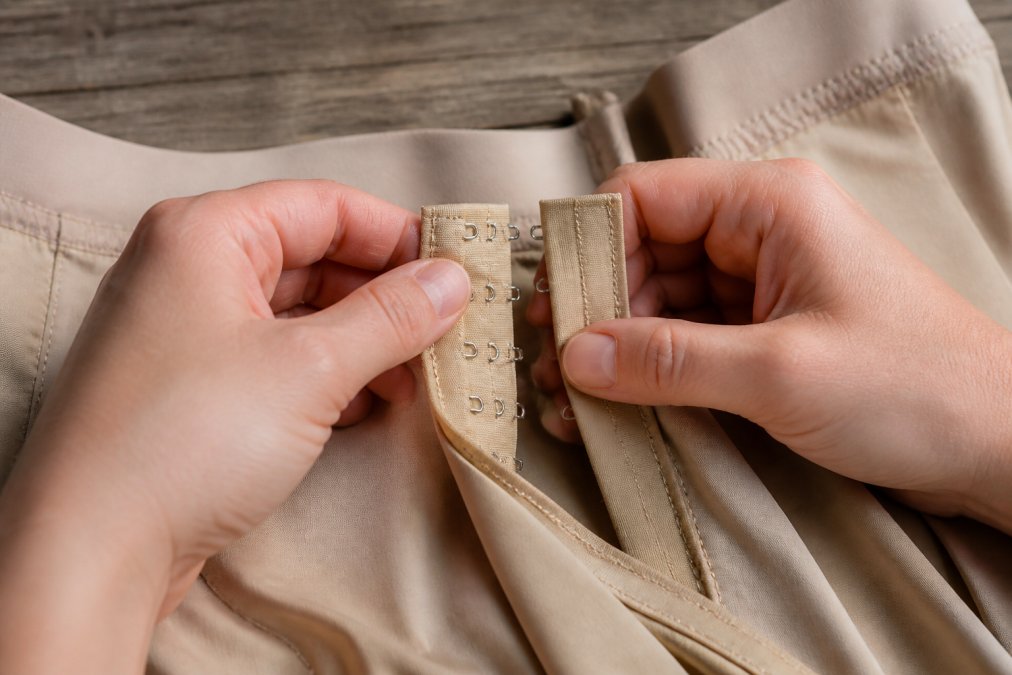
Preventive maintenance matters more than repair. Check the stitching around the closure every few washes. If you see loose threads or the eye loop starting to gap, reinforce it before it fails completely. Also rotate between two or three garments rather than wearing the same piece daily, which gives the elastic fibers time to recover between wears.
Pros and Cons of Crotch Hooks vs. Snap and Zipper Closures
Crotch hooks offer the best balance of security and adjustability among the three main closure types, but each option has trade-offs. Snap closures are the fastest to open but tend to pop open under high tension. Zippers are the most secure but add bulk and can dig into the skin when sitting.
| Closure Type | Bathroom Access | Security | Durability | Best For |
|---|---|---|---|---|
| Hook-and-Eye | Fast, one hand | High | High with care | Daily wear, adjustable fit |
| Snaps | Fastest | Moderate | Moderate, can pop | Light compression |
| Zipper | Moderate | Very high | High | Firm compression, special occasions |
Hook closures win for daily wear because they offer multiple adjustment points, letting you tighten or loosen the garment on your body without removing it. Snaps are simpler but offer no adjustability, and a snap that pops at the wrong moment is embarrassing. Zippers are reliable but unforgiving, with no give for body changes throughout the day or across a postpartum recovery period.
The one drawback of hooks is the learning curve. First-time users sometimes struggle to align the hook with the eye loop, especially reaching behind. But within a few wears, the motion becomes second nature, and the convenience of one-handed bathroom access outweighs the initial fumbling.
Accessibility and Dexterity Considerations for Daily Use
Hook-and-eye closures require more fine motor control than snaps, which matters for women with arthritis, postpartum hand swelling, or limited dexterity. The hook must be aligned precisely with the eye loop before it will engage, and this can be frustrating in a cramped public restroom stall.
Several design choices improve accessibility. A longer gusset opening gives you more room to see and reach the closure. Hooks that face forward are easier to manage than those positioned toward the back. Some women find it helpful to practice the motion at home before wearing the garment out, so the muscle memory is established.
If you have significant dexterity challenges, consider a front-hook design like The Front-Hook Shaper, where the closure column runs down the front of the garment where you can see and reach it easily. This eliminates the contortionist act of reaching behind to fasten a crotch closure and makes bathroom breaks genuinely one-handed. The National Institute on Aging's tips for managing buttons and fasteners notes that adaptive clothing strategies, including choosing easier fasteners, help older adults maintain independence in dressing.
The trade-off is worth stating plainly: hooks demand more dexterity than snaps but deliver a more secure, adjustable fit. For most women, the durability and fit benefits outweigh the minor learning curve, especially once you have a garment that stays put all day.
Choosing durable crotch hook shapewear comes down to understanding what causes closures to fail and selecting pieces designed to resist those forces. Hardware quality, reinforcement stitching, proper sizing, and gentle care all matter, and ignoring any one of them shortens the garment's life. TLovePlusSize builds shapewear with adjustable hook closures, medium to firm compression levels, and designs that move with your body across a full day of wear. Explore the collection to find a piece that fits your proportions and your routine, and experience shapewear that holds up to real life.
Frequently Asked Questions
Do crotch hooks break easily on shapewear?
Crotch hooks don't break easily when properly sized and maintained, but misalignment, incorrect fastening, and repeated stress from rolling down can cause failure. Quality matters: reinforced hardware and secure stitching significantly extend closure life. Proper fit reduces unnecessary tension on the hooks. Most failures result from wear-and-tear over months of use rather than defects. Choosing the right shapewear size and following care instructions minimizes breakage risk.
How do you maintain shapewear with hook-and-eye closures?
Hand wash in cool water with mild detergent and air dry to protect the hardware and fabric. Avoid high-heat wash cycles and dryers, which weaken both the closure mechanism and the elastic. Fasten hooks before washing to prevent tangling. Store flat or rolled, not bunched, to avoid bending the hardware. Inspect hooks regularly for misalignment or bent prongs. If a hook loosens, have it reattached by a tailor rather than forcing it closed, which can damage the garment.
How long does crotch hook shapewear typically last?
Well-made crotch hook shapewear lasts 12-24 months with regular wear and proper care. Durability depends on compression level, material elasticity, hook quality, and how frequently you wear it. Pieces worn daily may show wear sooner than those worn 2-3 times weekly. Reinforcement stitching around the closure extends life significantly. The Front-Hook Shaper from TLovePlusSize, designed with adjustable firm-compression hardware, is built for longevity in daily wear situations.
Can you repair a broken crotch hook on shapewear?
Yes, a broken hook can be repaired by a tailor if the damage is minor, such as a bent prong or loose attachment. They can replace the entire hook-and-eye set if needed. However, if the surrounding fabric is torn or the reinforcement stitching is damaged, repair may not be practical. Prevention through proper fit and care is more cost-effective than repair.