


Table of Contents
- How to Wash Your Everyday Shapewear: Step-by-Step
- Step 1: Check the Care Label First
- Step 2: Prep Your Shapewear for Washing
- How to Hand-Wash Shapewear Without Damaging It
- How to Machine-Wash Shapewear Safely
- How to Dry Shapewear Without Stretching It Out
- How Often to Wash Shapewear for Freshness and Longevity
- Common Mistakes That Ruin Shapewear (and How to Avoid Them)
- Conclusion
- Frequently Asked Questions
Last Updated: October 6, 2026
How to Wash Your Everyday Shapewear: Step-by-Step
Knowing how to wash your everyday shapewear keeps high-compression fabrics from losing their snap to hot water and rough spin cycles. Treated gently, a good piece holds its shape for years.
At TLovePlusSize, we build our shapers to move with you, so care instructions matter as much as fit. This guide covers hand-washing, machine-washing, and drying.
Step 1: Check the Care Label First
The care label is your starting point: every piece lists its fiber blend and the washing method it can handle, so read that tag before anything touches water.
Here is what to look for:
- Fiber content. Nylon, spandex, and elastane need gentler care than cotton.
- Temperature. Most shapewear calls for cold or lukewarm water.
- Method. Some pieces say hand-wash only. Others allow a delicate cycle.
If the label says hand-wash only, trust it, stretch fibers break down under heat and agitation and will not snap back.
Decode the Fiber Blend, Not Just the Fiber Name
The fiber ratio, not the fiber name, predicts how a piece behaves in water. High-compression shapers commonly run 75 to 85 percent nylon or polyester with 15 to 25 percent spandex; the higher the spandex share, the more the garment needs cool water and low agitation. Cotton-heavy blends (90 percent or more cotton) tolerate warmer water but hold moisture longer.
A few label details worth reading closely:
- "Hand wash only" vs. "hand wash recommended." The first is a hard limit. The second usually means the maker expects a delicate cycle in a mesh bag to be fine, but hand-washing will extend the life of the piece.
- "Do not wring" or "do not twist." This is a signal that the knit has a high spandex content and will distort if you wring it out.
- "Do not iron" and "do not dry clean." Heat and solvent-based cleaning both attack spandex. Dry cleaning is rarely worth the risk on a compression garment.
Why Construction Matters as Much as Fiber
Two shapers can share a fiber blend and still need different care, because construction changes where water, detergent, and friction go.
- Gussets and linings. A cotton gusset absorbs water differently than the shell and holds detergent residue longer, so add an extra cool-water rinse if the piece has a lined crotch.
- Silicone no-roll bands and gripper strips. Common on high-waist and thigh shapers, silicone picks up lint, body oil, and detergent film and degrades faster with heat. Wipe the band with a damp cloth between washes and keep the piece out of the dryer.
- Bonded seams and laser-cut edges. Bonded construction is more sensitive to heat and agitation than sewn seams. If your shaper has smooth, glue-like edges instead of stitches, treat it as hand-wash-first even if the label allows a delicate cycle.
A Plus-Size-Specific Note on Coverage and Friction
Shapewear that covers more of the body, full slips, high-waist shorts, bodysuits, picks up more sweat, body oil, and friction than a brief or cami. Two adjustments:
- Wash full-coverage pieces after every wear, especially in warm weather or under clothing that does not breathe well.
- Check the inner thigh and under-band areas for pilling and thinning, the first spots to show wear. Catching it early tells you when a piece is ready to retire.
If a label is missing or unreadable, default to the gentlest method: cool water, mild detergent, hand-wash, air-dry flat. You can always wash more gently than the label requires; you cannot undo damage from going harsher.
Step 2: Prep Your Shapewear for Washing
Prepping takes two minutes and protects the fabric. Close any hooks and fasteners first, open hooks snag the knit and pull threads loose.
Sort your shapewear from heavy items like jeans or towels. Rough fabrics and zippers cause friction that wears down the stretch.
Finally, spot-treat any deodorant marks or stains with a tiny bit of mild detergent. Let it sit for a few minutes before washing.
How to Hand-Wash Shapewear Without Damaging It
Hand-washing is the safest method for any shaper and takes under ten minutes.
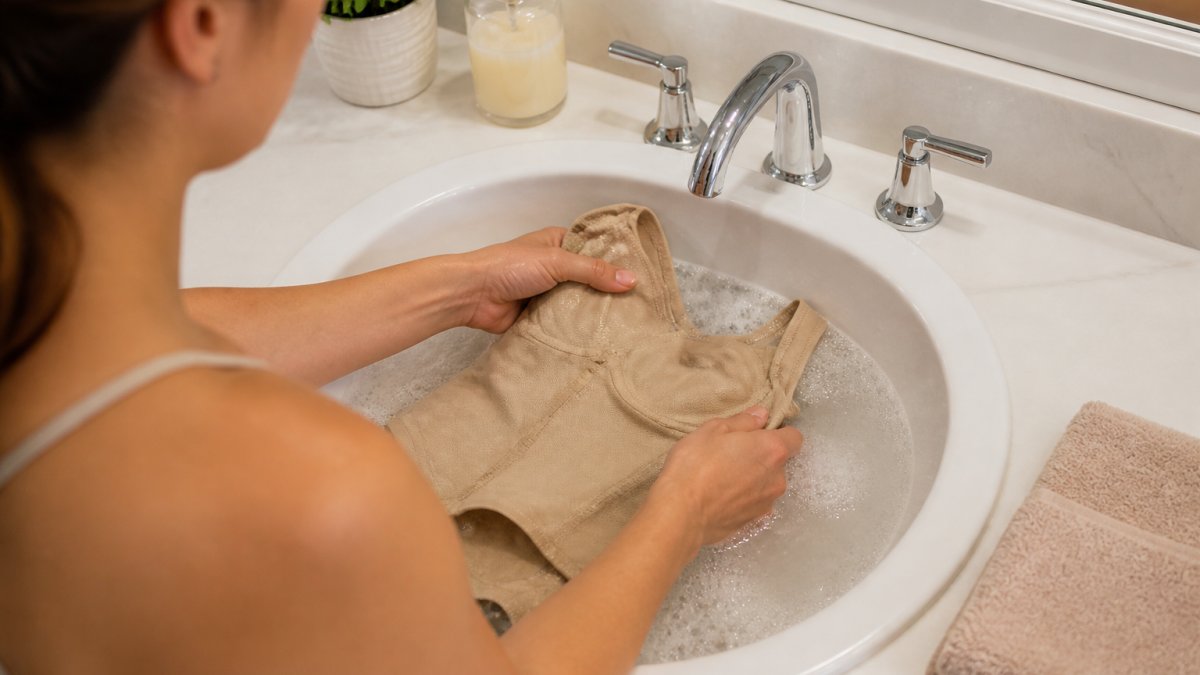
Submerge the shapewear and gently squeeze the suds through the fabric. Do not wring, twist, or scrub, those motions stretch fibers and break shape retention.
Rinse with cool water until the water runs clear. Then press the garment between two towels to remove excess water. Never twist it to dry.
The Right Water Temperature and Detergent
Lukewarm water, around 85 to 100 degrees Fahrenheit, is the safe zone. Hot water weakens spandex and fades colors; cold water works too, but lukewarm lifts body oils better.
For detergent, choose a mild liquid formula free of bleach, fabric softener, and heavy perfumes, softener coats fibers and cuts breathability.
How to Machine-Wash Shapewear Safely
Machine-washing works if you protect the garment first. Always use a mesh laundry bag to keep straps from tangling and stop fabric snagging on other items.
Set the machine to the delicate or gentle cycle with cold water and mild detergent, and skip the extra rinse and spin if your machine allows it.
Using a Mesh Bag and Choosing the Right Cycle
A mesh bag is the single best tool for machine-washing shapewear, acting as a buffer between your shaper and the drum. Choose one that fits loosely so the garment can still move and rinse.
Here is how to set up the load:
The Everyday Bodysuit Shaper →
- Place the inside-out shaper in the mesh bag.
- Wash only with other delicates, never with denim or towels.
- Select cold water and a gentle cycle.
When the cycle ends, pull the shapewear out right away. Leaving it wet in the drum invites odors and creases.
How to Dry Shapewear Without Stretching It Out
Air-drying is the only safe way to dry shapewear. Dryer heat breaks down spandex and nylon, and tumbling stretches the fabric out of shape.
If you hang it, use a padded hanger or drying rack.
Most shapers dry within a few hours. Flip them once halfway through to speed things up. Never put a damp shaper back in a drawer; let it dry fully first.
How Often to Wash Shapewear for Freshness and Longevity
The honest answer: more often than most people do, and the right frequency depends on how much of your body the piece covers. A general rule of one to two wears is a starting point, but it flattens the difference between a brief and a full bodysuit.
What Actually Builds Up in the Fabric
Shapewear sits against skin under compression, so it collects three things faster than a loose t-shirt:
- Sweat and sebum (body oil). Compression holds fabric tight against skin, leaving less air movement to evaporate moisture, so oil and sweat work into the knit.
- Dead skin cells and lint. These bind to oily fabric and make the surface feel rougher over time.
- Detergent and softener residue. Too much detergent or any fabric softener builds up in the fibers and traps odor instead of releasing it in the wash.
None of this is a medical problem on its own, it is a comfort and odor issue, and the reason shapewear smells stale faster than other garments even when it looks clean.
A Coverage-Based Wash Schedule
Set the interval by the piece's coverage and your activity level, not a single number:
| Garment type | Typical wash interval | Notes |
|---|---|---|
| Thong or brief shaper | After every wear | Small fabric area, direct contact, little airflow |
| High-waist short or thigh shaper | After every wear in warm weather; every 1-2 wears in cool weather | Covers more skin and traps more heat |
| Full bodysuit or slip shaper | After every wear | Largest coverage area, most sweat and friction |
| Compression cami worn over a base layer | Every 2-3 wears | Less direct skin contact |
| Sleep or lounge shaper | After every 1-2 nights | Overnight wear means long contact time |
A few situations should push you to wash sooner regardless of the table:

- You wore it for a full workday or through a commute. Heat and sitting increase sweat and friction.
- You wore it to a workout or in hot weather. Sweat volume goes up, and so does the need to rinse.
- You wore it over lotion, oil, or body cream. Oils transfer to the fabric and can break down spandex if left in.
The Plus-Size Coverage and Friction Angle
Pieces that cover more of the body, full slips, high-waist shorts, bodysuits, create more skin-to-fabric and fabric-to-fabric contact, which means:
- More sweat and oil transfer across a larger surface area, so the piece reaches "needs a wash" faster than a brief does.
- More friction at the inner thigh, under-band, and waistband. Friction plus moisture causes pilling, thinning, and that worn-out feel; washing after each wear removes the oil and grit that accelerate the damage.
- More trapped heat. Compression plus coverage reduces airflow, so fabric stays damp longer. A piece still slightly damp from yesterday should not go back on today.
This is not about any body being "harder" on garments, more coverage and compression simply mean more of what makes fabric need washing. Adjusting your schedule to the piece, not a fixed number, keeps shapers fresh and stretch intact longer.
A Quick Rinse Between Washes
To stretch a piece to the next wear without a full wash, soak it in cool water for a few minutes, squeeze gently (never wring), press between towels, and air-dry flat. This removes surface sweat and oil without detergent or agitation, a bridge, not a replacement for a real wash, since detergent is what actually lifts oil out of the knit.
When to Retire a Piece
Washing frequency protects the fabric, but shapewear does eventually wear out. Replace a piece when:
- The waistband or leg bands no longer stay put and roll or dig during the day.
- The fabric has visible thinning or pilling at friction points (inner thigh, under-band, seat).
- The compression feels noticeably looser than when you bought it, even after a fresh wash and air-dry.
A well-cared-for shaper can last a long time, but "long time" is measured in wears, not years. Rotating two or three pieces and washing each at the right interval gets the most out of every one.
Common Mistakes That Ruin Shapewear (and How to Avoid Them)
Most shapewear damage comes from a handful of habits. Avoid these and your pieces hold their shape far longer.
| Mistake | What Happens | The Fix |
|---|---|---|
| Hot water or dryer heat | Stretch fibers break down | Use cool water and air-dry |
| Fabric softener | Coats fibers, traps odor | Use mild, fragrance-free detergent |
| Wringing or twisting | Fabric stretches out of shape | Press between towels instead |
| Washing with heavy items | Friction snags and pills fabric | Wash with delicates in a mesh bag |
| Leaving it wet in the drum | Odor and set-in creases | Remove and air-dry right away |
One more habit to break: storing damp shapewear in a closed drawer. Always let it dry fully, then fold it flat. Hanging can stretch a shaper over time.
Conclusion
Caring for shapewear is not complicated, but the small choices add up. Cold water, mild detergent, a mesh bag, and air-drying keep your shapers smooth and supportive for the long run. Skip the heat and harsh chemicals, and the fabric rewards you.
At TLovePlusSize, we design our shapers to move with your body and hold their shape through everyday wear. Our Everyday Bodysuit Shaper offers medium, all-day hold for work and daily outfits. The High-Waist Thigh Shaper adds a silicone no-roll band for hold from the bra line down.

Frequently Asked Questions
Can you put shapewear in the washing machine?
Yes, but only on a delicate cycle with cold water. Place your shapewear in a mesh laundry bag to protect the fabric from snags and tangles. Use a mild detergent and skip the fabric softener, which can break down spandex and reduce stretch. If your shapewear has lace details or a silicone no-roll band, hand-washing is safer. Always check the care label first, since some pieces may have specific instructions.
How often should you wash everyday shapewear?
Wash your everyday shapewear after every one to two wears. Shapewear sits directly against your skin, so it collects sweat, body oils, and bacteria that can weaken elastic fibers over time. If you wore it for a full workday, wash it before wearing again. For postpartum or daily wear, a fresh piece each day keeps skin comfortable and helps your shapewear last longer. Rotating between two or three pieces also gives each one time to rest and recover its shape.
What detergent should you use to wash shapewear?
Use a mild, pH-neutral detergent or a gentle formula designed for delicates. Avoid detergents with bleach, enzymes, or heavy fragrances, as these can damage spandex, elastane, and lace. A small amount goes a long way. If you hand-wash, a pea-sized drop in a sink of cool water is enough. For machine-washing, use half the recommended amount for a normal load. This protects the fabric composition and helps maintain shape retention.
How do you dry shapewear without stretching it?
Never put shapewear in the dryer. Heat breaks down spandex and elastane, causing the garment to lose its hold and shape. Instead, gently squeeze out excess water without wringing or twisting. Lay the shapewear flat on a clean towel to air-dry, reshaping it to its original form. Avoid hanging it by the straps or waistband, since the weight of the wet fabric can stretch those areas. Keep it out of direct sunlight to prevent color fading.