


Table of Contents
- What You Actually Pay For at Each Price Point
- Cost-Per-Wear: The Math That Settles the Argument
- How to Stop Shapewear Rolling Down
- Finding the Best Shapewear for Plus Size Bodies
- How to Wash Shapewear to Make It Last
- Support Levels Compared: Medium, Firm, and Everything Between
- Frequently Asked Questions
Last Updated: September 16, 2026
What You Actually Pay For at Each Price Point
The price gap between budget and premium shapewear comes down to fabric engineering, not marketing. Expensive shapewear typically costs more because of denser knit construction, higher elastane content, and reinforced seams that hold their shape through repeated wear. Budget options cut costs on all three.
Textile engineering overview from the American Chemical Society
Fabric Recovery and Knit Construction
Fabric recovery is what separates a shaper that lasts two months from one that lasts two years. Higher denier yarns and tighter knit structures resist stretching out, which means the garment keeps its compression instead of bagging at the waist.
Seam Construction and Fit Consistency
Flat-lock seams and bonded edges cost more to manufacture than standard stitching, but they're what keep a shaper from digging in or showing under fitted clothing. Cheap seams create ridges; good ones disappear.
| Price Tier | Typical Fabric | Seam Type | Recovery Lifespan |
|---|---|---|---|
| Budget ($15-25) | Two-way stretch, lower denier | Standard stitched | Fewer washes before loosening |
| Mid-range ($30-40) | Four-way stretch, medium denier | Flat-lock seams | Holds shape through regular wear |
| Premium ($45-60) | Dense four-way knit, high elastane | Bonded or flat-lock | Retains tension long-term |
Cost-Per-Wear: The Math That Settles the Argument
Cost-per-wear is the price of a garment divided by how many times you actually wear it. It is the only number that settles the budget-versus-premium argument, because sticker price tells you nothing about value.
| Garment | Price | Wears Before Compression Fails | Cost Per Wear |
|---|---|---|---|
| Budget shaper | $20 | ~30 wears (about 2 months at 3x/week) | $0.67 |
| Mid-range shaper | $35 | ~100 wears (about 8 months at 3x/week) | $0.35 |
| Premium shaper | $55 | ~250 wears (about 2 years at 3x/week) | $0.22 |
Why Cheap Shapewear Fails Faster: The Elastane Mechanism
Elastane (also called spandex or Lycra) is the fiber that gives shapewear its snap-back. It is a segmented polyurethane, soft, flexible segments that stretch, and hard segments that hold the fiber together and pull it back into shape.
Premium shapewear slows that clock in three ways:
- Higher elastane content. More elastic fiber per square inch means each fiber carries less load and degrades more slowly.
- Higher denier yarns. Thicker yarns resist abrasion and fatigue better than thin ones.
- Denser knit structure. A tighter knit distributes tension across more fibers, so no single fiber is overworked.
The Sustainability Angle Nobody Talks About
Shapewear is almost entirely synthetic. Elastane, nylon, and polyester are petroleum-derived, and elastane in particular makes garments difficult to recycle because it contaminates the recycling stream for single-fiber textiles. Most municipal textile recycling programs cannot process blended stretch fabrics.
Running the Numbers for Your Own Life
Before you buy, do three things:
- Estimate your realistic wears per week. Be honest, most people overestimate.
- Multiply by 52 to get annual wears.
- Divide the price by the number of wears you expect before the garment loses compression.
If you wear shapewear twice a week, a premium piece pays for itself within the first year. If you wear it twice a year for weddings, a mid-range piece is the rational choice and the premium tier is a luxury, not an investment.
How to Stop Shapewear Rolling Down
Shapewear rolls down for three reasons: the waistband lacks grip, the size is wrong, or the garment's torso length doesn't match yours. Fixing the fit solves most rolling issues before you blame the garment.
Finding the Best Shapewear for Plus Size Bodies
The best shapewear for plus size bodies is built on plus-size patterns, not scaled-up straight sizes. Proper grading accounts for fuller busts, wider hips, and different torso proportions, which is why fit varies so much between brands.
Body positivity and apparel fit research from Cornell University
How to Wash Shapewear to Make It Last
Hand washing in cold water and air drying is the single best way to extend shapewear's life. Heat is the enemy: hot water and dryer cycles break down elastane fibers, which is what causes loosening and loss of compression.
Follow these steps:
- Turn the garment inside out before washing
- Use cold water and a mild detergent, never bleach or fabric softener
- Hand wash gently, or use a mesh bag on a delicate cycle
- Squeeze out water without wringing or twisting
- Lay flat to air dry, away from direct heat or sunlight
Support Levels Compared: Medium, Firm, and Everything Between
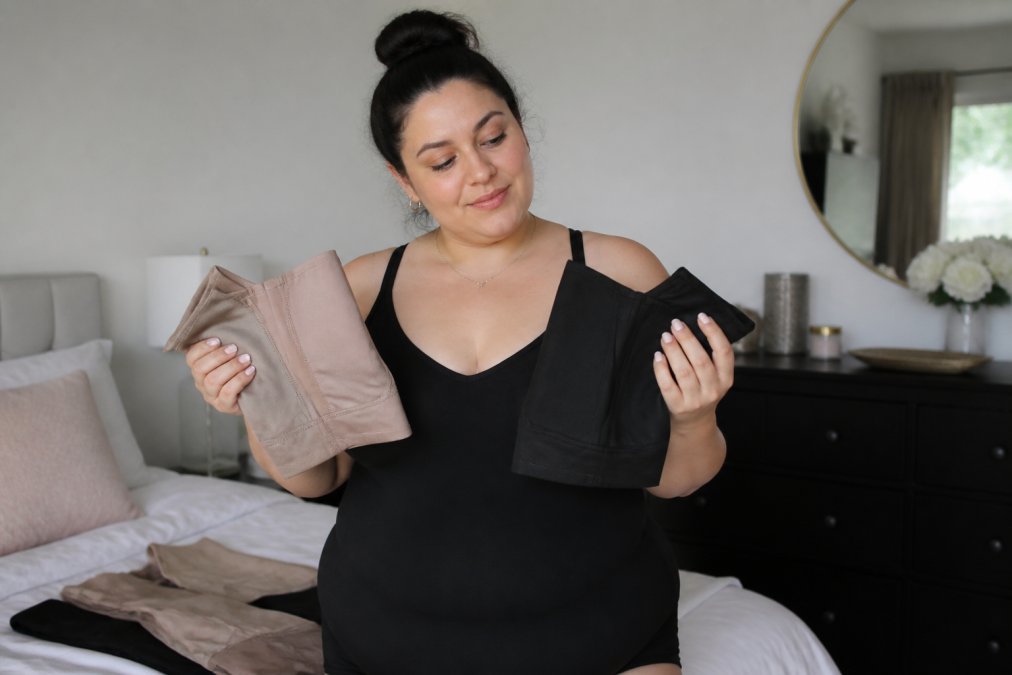
Support level describes how much compression a garment delivers, measured in the industry as a range of millimeters of mercury (mmHg) of pressure at the garment surface. Most consumer shapewear falls between roughly 5 mmHg and 20 mmHg. Medium hold sits at the low end and smooths the silhouette for daily wear. Firm hold sits at the high end and sculpts for bodycon dresses, formal events, and photoshoots.
What Compression Actually Does to the Body
Sustained external pressure on the torso affects three systems:
- Circulation. Compression above roughly 15 mmHg can reduce venous return from the lower body if the garment is not graduated (tighter at the ankle, looser at the waist). Most fashion shapewear is not graduated, which is why long wear can leave legs feeling tingly or heavy.
- Digestion. Abdominal compression pushes against the stomach and intestines. Most practitioners find that firm hold worn during or right after a large meal increases reflux and bloating discomfort. This is not a reason to avoid shapewear, it is a reason to time it.
- Skin and lymph. Tight, non-breathable fabric traps moisture and heat against the skin. For people prone to folliculitis, intertrigo, or heat rash, firm hold worn daily in summer is a predictable trigger.
None of this means firm hold is dangerous. It means firm hold is a tool with a use window, and medium hold is the correct default for anything longer than a few hours.
Body-Type ROI: Where Expensive Shapewear Actually Pays Off
The engineering differences between price tiers do not pay off equally across body shapes. Here is where the money tends to earn its keep:
| Body Shape | Where Budget Fails | Where Premium Earns Its Price |
|---|---|---|
| Hourglass | Waistband rolls under a defined waist-to-hip ratio | Bonded, silicone-lined bands and four-way knit hold the waist line without cinching |
| Apple | Tummy panels bag out and lose tension fast | Dense knit with high elastane content maintains compression through the midsection |
| Pear | Thigh shorts ride up because the leg opening is cut for a straighter hip | Patterned leg openings and mid-thigh length with grip tape stay put |
| Rectangle | Smoothing looks flat and shapeless | Strategic seam placement and paneled construction create curve where there is none |
Matching Support to the Outfit, Not the Ego
| Product | Support Level | Best For | Price |
|---|---|---|---|
| The Everyday Bodysuit Shaper | Medium | Daily work wear, all-day comfort | $30.00 |
| The Power Bodysuit Shaper | Medium | Fitted clothing, three color options | $30.00 |
| The Bodysuit Shaper | Medium to firm | Full coverage in one layer | $30.00 |
| The Front-Hook Shaper | Firm | Formal wear, postpartum recovery | $48.00 |
| The Firm Sculpt Bodysuit | Firm | Bodycon dresses, weddings, photoshoots | $55.00 |
The Front-Hook Shaper adjusts on the body with a column of hooks, so you can tighten or loosen as the day goes on, and an open bust means you wear your own bra. The Firm Sculpt Bodysuit runs four-way compression knit with a mid-thigh leg that does not roll, built for sculpted-line outfits.

Frequently Asked Questions
How do you tell the difference between cheap and expensive shapewear?
Check fabric recovery first: stretch a panel and see if it springs back flat or stays baggy. Look at seam construction, since flat-lock seams lie smooth while bulky overlock seams dig in. Feel the gusset and hook closures for reinforcement. Price tiers usually track three things: knit density, seam finishing, and whether the garment holds its shape after 20 to 30 washes. A $55 piece and a $30 piece can both be good buys, but the cheaper one typically loses elasticity and fit consistency faster.
Does expensive shapewear last longer than budget options?
It often does, because higher prices usually buy denser knit construction and better fabric recovery, the two things that fail first in cheap shapewear. That said, price alone guarantees nothing. A $55 bodysuit washed in hot water and dried on high heat can break down faster than a $30 one cared for properly. The real longevity test is cost-per-wear: divide the price by the number of wears you get before the garment stops smoothing or starts rolling down.
What features justify a higher price point in shapewear?
Four features earn the extra money: four-way compression knit that stretches in every direction, adjustable closures like front hooks that let you tune tension through the day, open-bust designs so you wear your own bra, and a mid-thigh leg that stays put instead of riding up. The Firm Sculpt Bodysuit at $55 carries all four. The Front-Hook Shaper at $48 gives you the adjustable hook column for $7 less. If a garment has none of these, the premium is mostly branding.
Is it worth buying expensive shapewear for postpartum recovery?
Postpartum bodies change week to week, so adjustable tension matters more than maximum compression. A fixed-compression garment that fits in week two may dig in by week six. The Front-Hook Shaper at $48 has a column of front hooks, so you can loosen or tighten as your body shifts, and its firm hold suits recovery without locking you into one fit. Buy one adjustable piece rather than three fixed ones you will outgrow.
Deciding whether expensive shapewear is worth the money comes down to how you wear it: a piece that fits properly, holds its shape, and lasts through regular washing delivers more value than three cheap replacements. TLovePlusSize builds plus-size shapewear around real proportions, from the medium-hold Everyday Bodysuit Shaper to the firm Front-Hook Shaper with adjustable hooks. Explore the collection and find the support level that fits your daily life.