


Table of Contents
- What Makes a Black Lace Bustier Work for Curvy Figures
- The Difference Between a Corset and a Bustier
- How to Choose the Right Size and Fit
- How to Style a Bustier for Plus Size Figures
- How to Stop Shapewear Rolling Down
- Comfort, Breathability, and Skin Sensitivity
- Top Picks from TLovePlusSize
- Frequently Asked Questions
Last Updated: September 29, 2026
What Makes a Black Lace Bustier Work for Curvy Figures
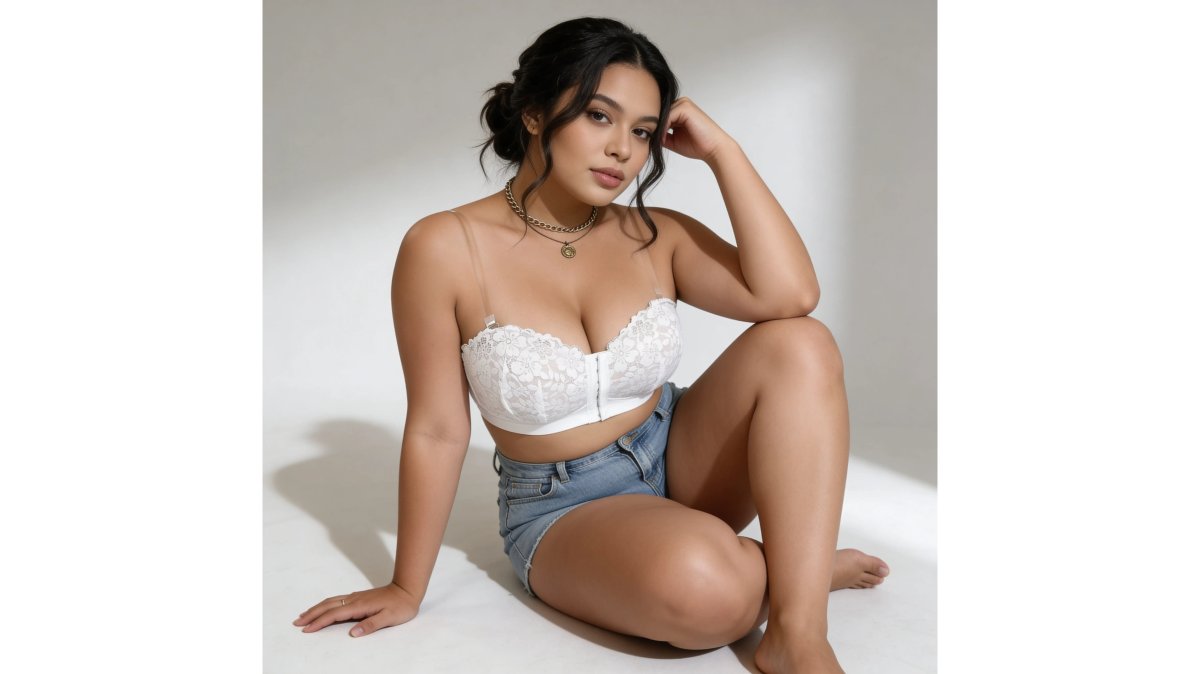
Yes, a black lace bustier can work beautifully for curvy figures when the boning, band, and cup depth are built for a fuller torso, not scaled up from a straight-size pattern. At TLovePlusSize, customers who have tried bustiers that dug into their ribs or flattened their bust had one problem: the garment's construction, never their body.

The Role of Steel Boning and Structured Bodices
Steel boning separates a bustier that holds its shape all evening from one that folds in half by dessert. Steel boned styles use flexible metal strips sewn into channels, distributing pressure along the torso instead of concentrating it at one point; plastic boning bends with body heat and loses shape. A structured bodice with spiral steel channels moves with you while holding the intended silhouette.
The Difference Between a Corset and a Bustier
A corset is a waist-training garment extending from bust to hip, using lacing or busks for compression. A bustier is a shorter, softer shaping top that stops at the waist and emphasizes the bust. The difference comes down to intent and duration.
| Feature | Bustier | Corset |
|---|---|---|
| Length | Ends at or above waist | Bust to hip |
| Purpose | Shape and bust support | Waist reduction |
| Closure | Zipper, hook and eye, or lace-up | Lace-up and busk |
| Wear time | Hours, occasion-based | Extended, training-based |
| Best for | Curvy figures wanting shape | Waist training |
How to Choose the Right Size and Fit
Start with your torso length, not your dress size. A bustier that fits your bust but sits too long digs into the hips when you sit; one that sits too short rides up. Measure shoulder to natural waist, then compare to the garment's length.
Why Standard Clothing Sizes Don't Translate to Bustier Sizing
A size 16 dress and a size 16 bustier are not built on the same numbers. Ready-to-wear is drafted around a fit model with a fixed bust-to-waist and waist-to-hip ratio; a structured bustier is drafted around the frame of the boning. That is why two people who both wear a 16 can need different bustier sizes.
- Underbust (rib cage), snug. Wrap a soft tape directly under your bust, level all the way around, exhale first. This is your band number and the most important measurement.
- Fullest bust, relaxed. Measure across the fullest point without compressing, then subtract the underbust number. A 1-inch difference is roughly an A cup, 2 a B, 3 a C, the same band-minus-bust math used in bra fitting.
- Natural waist, at the crease. Bend sideways; the crease that forms is your natural waist. Measure there, not at your pants waistband.
- Torso length, shoulder to natural waist. This decides longline versus standard length.
Fit Adjustments by Torso Length and Belly Shape
This is where curvy fit is actually won or lost.
- Short torso (under about 15 inches shoulder to waist): A standard bustier hits your hip bones when you sit. Choose a cropped or mid-length style ending above the natural waist; shorter boning channels are correct, not a defect.
- Long torso (over about 17 inches): A short bustier rides up because there is not enough body for the band to grip. A longline style reaching the natural waist gives the boning more surface to anchor against.
- High-waist belly (fullness above the navel): A straight-cut hem cuts across the fullest point and creates a shelf. Look for a curved or dipped front hem, or size the band to the underbust and accept a slightly looser waist.
- Apron belly (fullness curving forward below the waist): Choose a longline style extending past the belly's fullest point rather than cutting across it. A short hem resting on the apron rolls upward every time you sit.
Cup Depth and Band Tension
Most sizing problems for curvy figures come from three places:
- Cup depth: A plus size bustier with shallow cups spills at the top. Look for cups rated to your actual band and cup, not a generic "one size fits most." A deep enough cup will not gap at the top edge even when you raise your arms.
- Band tension: The band should sit flat against your rib cage; if it rolls or gaps, the boning is not doing its job. You should be able to slide two fingers under the band, no more.
- Gore and center front: On an underwired style, the center front should lie flat against your sternum. If it floats away, the cup is too shallow; if it digs in, the band is too small.
How to Style a Bustier for Plus Size Figures
Styling a bustier for plus size figures is about balancing structure with ease. The structured bodice does the work, so keep the rest relaxed: pair a lace-up or zip-front bustier with high-waisted trousers, a long skirt, or wide-leg jeans, and add a blazer for a layering look that reads dressy without feeling costume-like.
Three styling rules that hold up:
- Let the bustier be the statement piece. Keep jewelry minimal.
- Choose bottoms that sit at or above the waistline of the bustier so the hem does not fight the waistband.
- For lingerie-inspired daytime looks, layer a mesh or sheer shirt underneath rather than over.
How to Stop Shapewear Rolling Down
Shapewear rolls down for one reason: the band is not anchored. A hook and eye closure or silicone gripper at the top edge keeps it in place. If yours rolls, check three things before blaming the garment.
Comfort, Breathability, and Skin Sensitivity
Comfort comes down to three materials: mesh lining, lace quality, and the fabric against your skin. A mesh lining under a lace overlay adds a smooth layer that reduces friction and lets air move; lace alone against sensitive skin can itch, especially along eyelet edges and seams.
Why Lace Itches, and What Actually Fixes It
The itch is mechanical, not imaginary. Lace is an openwork fabric, so the raised threads forming the pattern sit directly against skin, creating hundreds of tiny contact points. On a fuller torso those points sit under a band under tension, pressing lace into skin all day; add sweat and the friction compounds.
- A bonded or sewn mesh lining under the lace at the band and cup edge, where pressure is highest.
- A plush or folded underband rather than a raw lace edge; a raw edge rolls and abrades, a folded edge distributes pressure.
- Flat or bonded seams at the side and back. A raised seam under tension is the most common cause of a red mark that lasts past the event.
Breathability: What Traps Heat and What Doesn't
Breathability matters most in summer or under heavy fabrics, so a mesh or cotton-lined band beats a fully synthetic one. What moves air:
- Lining fiber: A cotton-blend or open mesh lining breathes; solid polyester holds moisture against the skin.
- Boning channel fabric: Channels are often a tight woven synthetic. That is fine, they are narrow, but a fully synthetic body under a fully synthetic lining gets clammy.
- Lace density: Tight, heavy lace traps more heat than open, airy lace. If you run warm, choose a lighter lace weight even if it feels less structured; the boning, not the lace, holds the shape.
Long-Wear and Skin Sensitivity
Wearing a bustier for more than a few hours? Treat it like any garment that sits against skin under pressure:
- Give your skin a break. Take the piece off for a few minutes every few hours if you can, and let the skin under the band dry.
- Wash before first wear. Manufacturing finishes and sizing agents on new lace are a common irritant; a gentle hand wash removes them.
- Watch for pressure marks that don't fade. A red line gone within an hour is normal. One lasting into the next day means the band is too tight or the edge too sharp, size up or switch to a lined band.
- If you have a known adhesive or dye sensitivity, patch-test a new piece on your inner arm for an hour before an event.
Top Picks from TLovePlusSize
Our top pick for curvy figures is The Longline Lace Bustier ($40.00). The longline body gives shape and minor smoothing through the band area, and the front zip makes it easy on and off. It comes in tones from pure white to deep black, and the black version is the one most customers reach for on a night out.
| Product | Price | Support Level | Best For |
|---|---|---|---|
| The Longline Lace Bustier | $40.00 | Medium to firm | Bustier fit, front zip |
| The Lace Corset Top | $43.00 | Firm | Outerwear, dressy events |
| The Strapless Lace Bra | $40.00 | Medium to firm | Strapless outfits |
| The Goddess Lace Set | $40.00 | Medium to firm | Fuller bust, full coverage |
| The Strappy Lace Set | $53.00 | Medium to firm | Lingerie as the moment |
Frequently Asked Questions
Can curvy women wear lace bustiers comfortably?
Yes, curvy women can wear lace bustiers comfortably when the piece is designed with proper support. Look for features like steel boning, a structured bodice, and a mesh lining for breathability. The key is finding a bustier that matches your torso length and provides enough bust support without digging in. Brands like TLovePlusSize offer options specifically designed for fuller figures, so you get both style and comfort.
What is the difference between a bustier and a corset for plus sizes?
A corset is typically designed for waist training and firm compression, using steel boning to cinch the midsection. A bustier, on the other hand, focuses on shaping the bust and torso for a smooth silhouette under clothing. For plus sizes, a bustier often provides more comfort for all-day wear, while a corset offers more dramatic waist reduction. Your choice depends on whether you want everyday shaping or a more intense hourglass effect.
How should a bustier fit on a curvy frame?
A well-fitting bustier should feel snug but not restrictive. The band should sit flat against your ribcage without rolling down, and the cups should fully contain your bust without spillage. Check that the boning doesn't dig into your sides or hips. If you have a longer torso, look for longline styles. Always consult the brand's sizing chart and measure your underbust and waist before ordering.
Do bustiers provide the same support as shapewear?
Bustiers and shapewear serve different purposes. Shapewear smooths and compresses the midsection, hips, and thighs, often using stretch fabrics. A bustier provides bust support and torso shaping, usually with underwire and boning for structure. For comprehensive support, some women wear a bustier for the upper body and separate shapewear for the lower body. Neither is inherently better; it depends on which areas you want to target.
How do I stop my shapewear from rolling down?
To prevent rolling, choose shapewear with a silicone gripper band or a longer torso length that stays put. Avoid styles that are too small, as they will roll more. Look for hook and eye closures or adjustable straps for a custom fit. If you have a shorter torso, a waist cincher may work better than a full bustier. Always follow the brand's size guide and consider your body's proportions when selecting a style.
Finding a black lace bustier that fits your shape, not the other way around, is the whole game. TLovePlusSize builds pieces that move with your body, from everyday essentials to lace-detailed styles for date night, with designs that smooth and shape your silhouette without digging in. Explore the collection and find the piece that makes you feel sexy, unstoppable, and comfortable in your own skin.