


Table of Contents
- Why Postpartum Shapewear Helps Changing Bodies
- When to Start Wearing Postpartum Shapewear
- Choosing Shapewear for C-Section Recovery
- How to Stop Shapewear Rolling Down
- Belly Wraps, Girdles, and Bodysuits: What Fits Your Recovery
- Sizing for a Body That Is Still Changing
- Sensory Sensitivity, Skin, and All-Day Comfort
- Conclusion
- Frequently Asked Questions
Last Updated: September 22, 2026
Why Postpartum Shapewear Helps Changing Bodies
Postpartum shapewear is a supportive garment that applies gentle, even compression across the abdomen, waist, and back during the weeks and months after birth. Unlike firm waist trainers, postpartum shapewear for changing bodies prioritizes comfort and gradual support over aggressive cinching. At TLovePlusSize, we hear from new mothers who want to feel held together without feeling squeezed.
Compression, Core Support, and Posture Correction
Abdominal compression distributes pressure evenly across the torso rather than digging into one spot. A garment that grips too hard in one place creates discomfort; one that spreads pressure gently supports the core without restricting breathing.
When to Start Wearing Postpartum Shapewear
For many women, gentle postpartum shapewear can be introduced within the first week or two after a vaginal birth, once you feel ready and your doctor agrees. After a C-section, wait for clearance, since incision healing comes first. Your recovery and your provider's guidance are the deciding factors.
Choosing Shapewear for C-Section Recovery
A C-section changes the shapewear equation: you are recovering from major abdominal surgery, and the garment has to work around a healing incision rather than over it. The goal is support that reduces strain on the surgical site, not compression that presses on it.
What the garment must do after a C-section
- Clear the incision line. A high-waist cut that sits above the scar, or a soft panel that rests gently over it without pressure, prevents rubbing and irritation. Anything that digs into the scar is the wrong garment, no matter how well it smooths.
- Stay adjustable. Post-surgical swelling shifts day to day, and so does tenderness. Hook-and-eye rows, velcro panels, or wrap-style closures let you loosen the fit on a bad day and tighten it as swelling subsides.
- Breathe. A healing incision needs airflow. Lightweight, breathable fabric, not a heavy rubbery panel, reduces moisture buildup and skin irritation around the scar.
- Support the whole torso, not just the belly. After surgery, the lower back and sides often need as much support as the front. A bodysuit or high-waist design that distributes pressure evenly does more for comfort than a narrow belly band.
Stage-by-stage guidance
Weeks 1-2 (hospital and early home recovery): Follow your surgeon's instructions first. Many providers supply or recommend a specific abdominal binder for the first days. If you use your own garment, choose the lightest hold available and wear it for short stretches, protecting the incision comes before smoothing.
Vaginal birth vs. C-section: different needs
After a vaginal birth, the priorities are midsection support, lumbar support, and comfort during long feeding and carrying sessions. A belly wrap, girdle, or medium-hold bodysuit usually fits the bill, and you can often start gentle support within the first week or two.
Diastasis recti and the abdominal wall after surgery
Diastasis recti, a separation of the abdominal muscles along the midline, is common after pregnancy and can be more pronounced after a C-section because the surgery disrupts the abdominal wall. Support garments can make the midsection feel more comfortable while you recover, but they do not close the gap on their own.
How to Stop Shapewear Rolling Down
Rolling down is the number-one complaint about shapewear, and it almost always comes down to fit, not the garment. A shaper rolls when the band is too loose, sits at the wrong point on your torso, or the fabric has lost its stretch. The fix starts with sizing and placement.
Here is how to stop shapewear rolling down:
- Measure your natural waist, not your hip. A band that sits at your true waist, the narrowest point, has less room to slide.
- Size up if you are between sizes. A too-small band digs in and rolls; a correct band stays put.
- Look for a silicone no-roll band. Our High-Waist Thigh Shaper uses one at the natural waist, which is the single most effective feature against rolling.
- Smooth the garment upward as you put it on. Pull it up in sections rather than yanking it into place.
- Check the closures. Adjustable hook-and-eye or velcro fastenings let you tighten the fit as swelling changes.
Belly Wraps, Girdles, and Bodysuits: What Fits Your Recovery
Each style of post-pregnancy support does a different job. A belly wrap is adjustable fabric you wind around the midsection; a girdle is a structured garment with firm panels; a bodysuit is a one-piece that smooths the torso and often the thighs. None is universally better, the right pick depends on your birth, your recovery stage, and what you wear over it.

| Style | Best For | Support Level | Adjustability |
|---|---|---|---|
| Belly wrap | Early weeks, swelling that shifts daily | Light to medium | High, wraps tighten or loosen |
| Girdle | Structured midsection and lumbar support | Medium to firm | Moderate |
| Bodysuit | All-day smoothing under clothing | Medium | Low to moderate |
| High-waist thigh shaper | Hold from bra line to mid-thigh | Medium to firm | Moderate |
Diastasis Recti and Abdominal Wall Support
Diastasis recti is a separation of the abdominal muscles along the midline, common after pregnancy. Support garments can make the midsection feel more comfortable while you recover, but they do not close the gap on their own. A medium-hold bodysuit or wrap can ease the feeling of a weak abdominal wall during daily activity.
Sizing for a Body That Is Still Changing
Size for the body you have this week, not the one you had before pregnancy. Postpartum bodies change fast, swelling shifts, the uterus shrinks over the first six weeks, and weight redistributes, so a garment bought for your pre-birth measurements will likely fit wrong within a month. Measure accurately, buy for the current stage, and choose garments that adapt as you change.
The Postpartum Shaper Bodysuit →
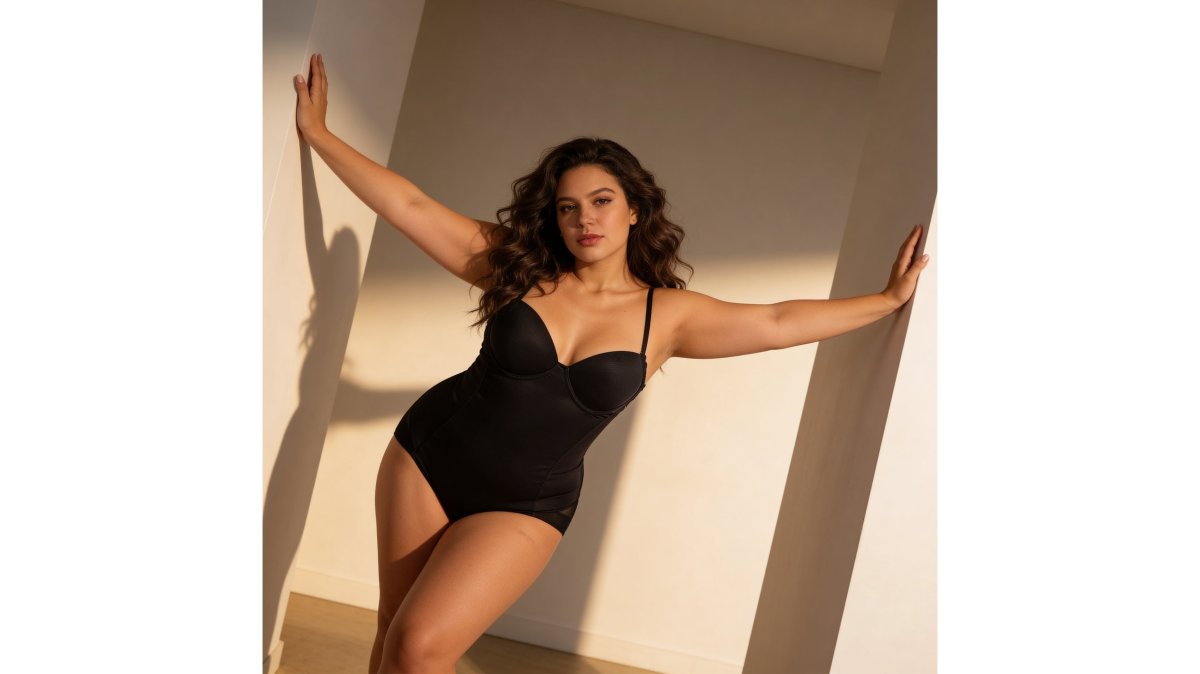
How to measure for postpartum shapewear
Use a soft measuring tape over bare skin or thin clothing, not over jeans or a bulky top.

- Natural waist: the narrowest point of your torso, usually just above the belly button. This is where a no-roll band should sit.
- Hip: the fullest part of your hips and seat, feet together.
- Underbust and bust: for bodysuits with a built-in bra, you need both to get the right fit through the chest.
- Thigh: mid-thigh circumference if you are considering a thigh shaper.
Size by recovery stage, not by pre-pregnancy size
- Weeks 1-2: Choose the lightest hold and size up if you are between sizes. Swelling is at its peak, and a garment that fits snugly now will be too tight in a week.
- Weeks 3-6: Re-measure. Most women settle into a medium hold here, and adjustable closures let one garment cover a range of sizes as swelling drops.
- Week 6 and beyond: Re-measure again. If your size has stabilized, invest in a better-fitting medium or medium-to-firm piece; if it is still shifting, stay with adjustable designs.
When you are between sizes
Size up. A too-small band digs in, rolls down, and creates pressure points; a correctly sized band stays put and supports without pinching. On a bodysuit, size up on the torso and rely on adjustable closures to fine-tune.
Sensory sensitivity and skin
If you find seams, tags, and tight bands unbearable, you are not being difficult. Sensory sensitivity is common, and the postpartum period can heighten it. The garment that works for you is the one you can forget you are wearing: breathable fabric, flat seams, soft edges, and a hold light enough that you stop noticing it.
Sensory Sensitivity, Skin, and All-Day Comfort
If you find seams, tags, and tight bands unbearable, you are not being difficult. Sensory sensitivity is common, and the postpartum period can heighten it. The garment that works for you is the one you can forget you are wearing: breathable fabric, flat seams, soft edges, and a hold light enough that you stop noticing it.
Conclusion
Recovery is not a race, and the right postpartum shapewear supports you without demanding your attention all day. TLovePlusSize designs shapewear that moves with your body, from medium-hold bodysuits to high-waist shapers with no-roll bands, all built to smooth and support through a body that is still changing. Explore the TLovePlusSize collection and find the hold that fits your recovery, your outfit, and your day.
Frequently Asked Questions
What is the best body shaper for recovery after pregnancy?
The best option depends on your birth and recovery stage. For general postpartum recovery and everyday smoothing, a medium-hold bodysuit with a smooth front through the abdomen and a built-in soft bra works well, like The Postpartum Shaper Bodysuit. If you want hold from the bra line down through the thighs, a high-waist thigh shaper with a silicone no-roll band gives more coverage. Look for breathable fabric, adjustable closures, and a fit that does not dig into your sides.
Is it okay to wear a body shaper after giving birth?
Many women wear postpartum shapewear for abdominal compression and core support, but timing matters. After a vaginal birth, some providers clear light compression within the first week or two. After a C-section, wait for your incision to heal and get clearance from your doctor, often around four to six weeks. Stop wearing it if you feel pain, numbness, or increased swelling, and check with your provider before starting.
Does shapewear help diastasis recti?
Shapewear does not close a diastasis recti gap on its own, but it can support the abdominal wall while you heal and make movement more comfortable. A medium-hold garment with targeted compression across the midsection reduces strain during daily activities. Pair it with guidance from a physical therapist or your doctor for core rehabilitation. Think of shapewear as support during recovery, not a treatment for the separation itself.
When is it safe to start wearing shapewear after a C-section?
Most doctors clear C-section patients for compression garments around four to six weeks postpartum, once the incision has closed and swelling has settled. Before that, avoid anything that presses directly on the incision. When you do start, choose a high-waist style that sits above the scar rather than across it, and pick breathable fabric with adjustable closures. Stop and call your provider if you notice redness, discharge, or pain at the incision site.
How do I stop my postpartum shapewear from rolling down?
Roll-down usually comes from the wrong size or a waistband that sits at the wrong point. Size up if the band digs in, and look for styles with a silicone no-roll band like The High-Waist Thigh Shaper. Position the band at your natural waist, not on your hip bone, and smooth the fabric upward before you sit down. Bodysuit styles with shoulder straps also resist rolling better than strapless briefs.
How do I choose the right size when my body is still changing?
Measure your current waist, hips, and torso, not your pre-pregnancy numbers, and size to the larger measurement if you are between sizes. Medium-hold styles like The Everyday Bodysuit Shaper flex with small changes better than firm-compression garments. If your size is shifting week to week, check the brand's return and exchange policy before buying so you are not stuck with a piece that stops fitting.
Can I wear postpartum shapewear under work clothes all day?
Yes, if you pick a medium-hold style in breathable fabric. The Power Bodysuit Shaper comes in three tones so it disappears under fitted clothing, and medium hold is designed for all-day wear without the breath-holding feeling of firm compression. Take it off if you feel short of breath, numb, or uncomfortable. Many women wear theirs from morning meetings through evening events without adjusting.