


Table of Contents
- Why Shapewear Rolls Down and How to Stop It
- How to Choose the Right Shapewear Size to Prevent Rolling
- The Role of Silicone Strips and Grip Technology
- Layering and Bra Strap Techniques That Work
- Shapewear Rolling Down Solutions for Your Body Type
- Comfortable Shapewear for All-Day Wear Without Migration
- Quick Fixes and Troubleshooting When Rolling Happens
- Frequently Asked Questions
Last Updated: September 19, 2026
Why Shapewear Rolls Down and How to Stop It
Shapewear rolling down happens because your body moves throughout the day, your torso shifts when you sit, stand, and bend, and shapewear that doesn't anchor properly will migrate downward with every movement.
Most shapewear relies only on elastic waistbands to stay in place. Without proper grip technology and sizing, even premium shapewear will creep down by midday.
Your shapewear needs multiple anchor points: a snug fit, silicone strips, and proper layering technique.
This guide covers proven fixes for preventing shapewear from rolling down: sizing, grip technology, layering techniques, and body-type specific solutions.
How to Choose the Right Shapewear Size to Prevent Rolling
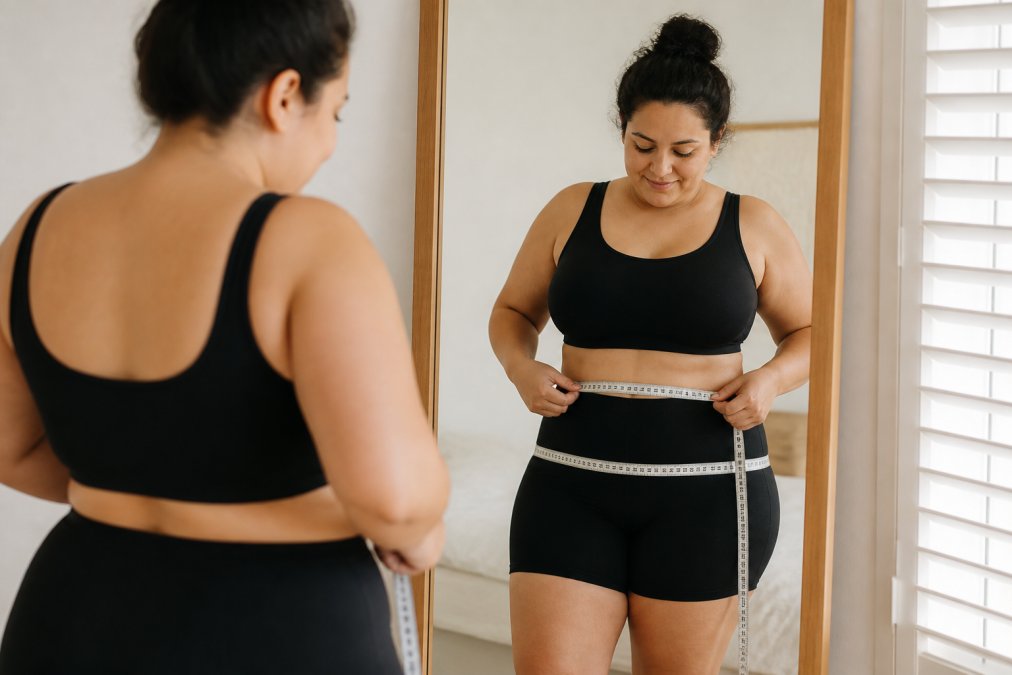
Incorrect sizing is the most common cause of rolling. Too large and it slides; too small and it digs in, then shifts as your body adjusts.
Measure your natural waist, hip at the fullest point, and high hip just above your hip bone with a soft measuring tape. Don't rely on guessing or your clothing size, shapewear sizing runs differently.
Match your measurements to the size chart. If you fall between sizes, choose based on your hip measurement first, your hips are the hardest part to fit.
Consider your body type: pear-shaped bodies need more hip coverage, apple-shaped bodies need a firmer waist, and hourglass figures need balanced support across torso and hips.
The Role of Silicone Strips and Grip Technology
Silicone strips are a common feature designed to prevent shapewear from rolling down. These grips often line the inside of shapewear at the waistband, leg hem, and sides, gripping your skin without slipping.
Silicone creates friction that prevents the garment from sliding. Without it, even perfectly fitted shapewear will migrate downward as you move.
Look for shapewear with features designed to keep it in place, such as:
- Waistband: Features that keep the top from rolling down
- Leg hem: Elements at the thigh or mid-thigh that prevent the garment from riding up and bunching
- Side seams: Some shapewear adds extra stability along the sides.
The Front-Hook Shaper from TLovePlusSize ($48.00) uses compression knit combined with adjustable hooks down the front, delivering the firmest hold available. The hooks let you tighten or loosen throughout the day as needed. This design solves the rolling problem by giving you control over fit in real time.

Layering and Bra Strap Techniques That Work
How you layer shapewear affects whether it rolls. The right technique anchors it, but layering alone isn't enough, your posture and movement patterns determine whether shapewear stays in place.
Foundation Layering: Bra and Shapewear Positioning
Wear a well-fitting bra that sits firmly on your ribcage, it provides an anchor point at the top of your torso. If your bra is loose or rides up, your shapewear will follow.
Position the waistband at your natural waist, not lower. Pulling it too low causes rolling.
Add fitted outer clothing, tight layers create grip, while loose layers allow sliding. Avoid oversized or flowing styles.
Posture and Sitting Mechanics
Rolling happens most during sitting because sitting compresses your torso by 1-2 inches, making shapewear that fits perfectly standing too long and prone to bunching.
To prevent rolling while sitting:
- Sit upright with your back against the chair to distribute compression evenly and reduce bunching.
- Keep your hips back in the chair to distribute pressure across a wider area.
- Avoid crossing your legs tightly, which compresses your hip and thigh area. Cross loosely at the ankle or knee if needed.
Movement Patterns and Daily Activities
Different activities create different rolling patterns:
- Bending and reaching: Choose shapewear with reinforced side seams and silicone grips along the sides to prevent lateral shifting.
- Walking and stairs: Prioritize shapewear with silicone grips at the leg hem and mid-thigh if you climb stairs regularly.
- Driving: Test your shapewear in your car before committing to all-day wear, as car seats compress your torso differently.
- Standing: Extended standing requires medium-to-firm compression and silicone grips at the waistband.
Outer Clothing and Friction Anchoring
Use fashion tape at the waistband to prevent upward migration, especially under dresses or during frequent bending.
Consider a bodysuit style shapewear instead of high-waisted shorts. Bodysuits cover from shoulder to hip in one piece, eliminating gaps and providing continuous anchor points from shoulder to thigh.
For jobs or activities that require frequent movement (healthcare, retail, hospitality), a bodysuit with reinforced side seams and full-thigh coverage outperforms shorts-style shapewear because it anchors at multiple points and accommodates the full range of motion your job requires.
Shapewear Rolling Down Solutions for Your Body Type
Your body shape determines which solutions work best. One-size-fits-all advice doesn't account for the fact that bodies are different.
For pear-shaped bodies: Focus on hip and thigh support. Rolling happens more in the hip area because that's where you're widest. Choose shapewear with reinforced leg hems and silicone grips along the thighs. The Mid-Thigh Bodysuit Shaper ($48.00) provides medium-to-firm hold from shoulder to mid-thigh, giving you full support where you need it most. The brown color option works beautifully with deeper skin tones.

For apple-shaped bodies: Prioritize waistband stability. Rolling starts at the waist because that's your fullest point. Look for high-waisted shapewear with extra-firm compression and silicone grips at the waistband. Adjustable options like The Front-Hook Shaper let you customize waist tightness throughout the day.
For hourglass figures: You need balanced support. Your curves mean shapewear needs to grip at multiple points. Choose bodysuits that provide consistent compression across torso and hips. Avoid shapewear that's designed for one area only.
For rectangular body types: You have more flexibility. Rolling is usually less of an issue because you don't have dramatic curves that create pressure points. Medium compression shapewear works well. The Power Bodysuit Shaper ($30.00) in three colors (skin, coffee, and black) provides smooth all-day hold across torso and hips without excessive firmness.
Comfortable Shapewear for All-Day Wear Without Migration
All-day comfort and staying in place aren't opposites. You can have both if you choose the right compression level, fabric composition, and care practices that preserve elasticity over time.
Compression Level and Comfort Balance
Medium compression is the sweet spot for all-day wear. Firm compression provides more smoothing but becomes uncomfortable after four hours of sitting and moving. Medium compression smooths your silhouette while staying breathable and comfortable. The Everyday Bodysuit Shaper ($30.00) delivers medium hold designed specifically for all-day wear without the breath-holding feeling of firm compression.

Fabric Composition and Elasticity Degradation
Shapewear rolling increases as fabric loses elasticity. This happens through two mechanisms: mechanical stretching during wear and chemical breakdown during washing. Quality shapewear often uses nylon and spandex blends that maintain recovery. Spandex is an elastic component that helps hold the garment in place (Checking your browser). When spandex degrades, the fabric around it can become loose.
Fabric degradation accelerates with improper washing. Hot water breaks down spandex fibers faster than cold water. Machine drying with heat causes permanent elasticity loss. Hand washing in cold water and air drying extends shapewear life by 50% or more compared to machine washing and drying.
Fabric Recovery and All-Day Performance
Fabric recovery is the material's ability to return to its original shape after stretching. Shapewear with poor fabric recovery loses its grip over time. By midday, it's looser and more prone to rolling. Premium shapewear maintains elasticity all day because the spandex fibers resist permanent deformation.
You can test fabric recovery yourself: stretch a small section of your shapewear waistband for 10 seconds, then release.
Moisture and Friction Loss
Seamless Construction and Pressure Distribution
Replacing Worn Shapewear
Quick Fixes and Troubleshooting When Rolling Happens
Even with perfect sizing and technique, rolling can happen. Life is unpredictable. Here's what to do when it occurs.
Frequently Asked Questions
Why does my shapewear keep rolling down at the waist?
Shapewear rolls down when the garment is too loose, the fabric lacks sufficient elasticity, or there's nothing to anchor it to your body. The waistband migrates downward as you move, sit, and bend throughout the day. This can happen when you've chosen a size too large. Features designed for grip and proper sizing are important for preventing this frustrating displacement.
Does sizing up or down help prevent shapewear from rolling?
Sizing down typically prevents rolling better than sizing up, but only if the garment still fits your body properly without cutting off circulation or causing discomfort. A size too large creates excess fabric that has nothing to grip, while a size too small may roll due to tension and lack of breathable fabric recovery. Measure your natural waist, hip, and thigh circumference, then compare those measurements to the brand's sizing chart, never guess based on your clothing size alone.
Can silicone strips really keep shapewear from rolling?
Features designed for grip can be effective anti-roll features. These features can create friction between the shapewear and your skin, anchoring the garment in place as you move. They often work best when positioned at the waistband and leg hem. However, such features alone aren't always enough, they can work best combined with proper sizing and garments designed to resist displacement.
What fabric features help shapewear stay in place all day?
Look for high-quality fabrics with strong elasticity and fabric recovery, the ability to bounce back after stretching. Breathable fabrics can help prevent the garment from becoming slippery as you sweat. Features that provide structural support can resist rolling. Construction that reduces friction points can help prevent migration. The Front-Hook Shaper offers the firmest hold with adjustable compression, while The Power Bodysuit Shaper provides medium hold that works for most all-day situations without the feeling of constant compression.
Shapewear rolling down ruins confidence and comfort at work. The fix starts with accurate sizing and silicone grip technology. TLovePlusSize's collection combines both. The Everyday Bodysuit Shaper provides medium compression for all-day comfort, while The Front-Hook Shaper offers adjustability when you need maximum control. Explore our full range and find the shapewear that stays put all day long.