


Table of Contents
- Why Shapewear Fails at Thigh Chafing (and How to Fix It)
- Fabric Science: What Actually Prevents Thigh Chafing
- Shapewear vs. Anti-Chafing Shorts: What's the Difference?
- How to Stop Shapewear Rolling Down and Rubbing
- Thigh Chafing Remedies: A Post-Wear Skin Care Routine
- Choosing the Right Length and Coverage for Your Outfit
- Final Thoughts on Preventing Thigh Chafing With Shapewear
- Frequently Asked Questions
Last Updated: September 8, 2026
Why Shapewear Fails at Thigh Chafing (and How to Fix It)
Thigh chafing is that raw, burning friction where your inner thighs rub together, and it can turn a summer dress or a long workday into a misery. Most women reach for shapewear to solve it, only to find the garment rolls down by noon or hikes up with every step, leaving them worse off than before. The problem is rarely the concept of shapewear itself; it is almost always the construction and fit of the specific garment you chose.
The fix starts with understanding what you are actually asking the garment to do. To prevent thigh chafing with shapewear, you need a piece that stays anchored at the waist while providing a smooth, continuous barrier down the leg. If the waistband digs or the leg hem creeps, friction increases rather than decreases, which is why so many women abandon shapewear entirely and default to the dreaded "chub rub" all summer.
The difference between a garment you forget you are wearing and one you cannot wait to peel off comes down to engineering, not just fabric. A common mistake is buying a bodysuit or short that is technically the right size but structurally wrong for your body shape, which leads to constant adjusting and frustration.
Fabric Science: What Actually Prevents Thigh Chafing
The science of chafing prevention is about managing friction and moisture at the skin level. Chafing occurs when skin-to-skin contact combines with sweat and movement, breaking down the skin barrier over time (peer-reviewed research). The right fabric interrupts that contact with a smooth, continuous layer that also wicks moisture away from the skin.
Moisture-wicking synthetic fibers like nylon and spandex are the gold standard here, and they are what you should look for in any anti-chafe garment. Cotton, by contrast, absorbs sweat and stays wet against the skin, which increases friction rather than reducing it (the CDC). A high-quality shapewear short uses a dense knit of nylon and spandex that feels almost like a second skin, with seamless construction to eliminate the rubbing points that stitched seams create.
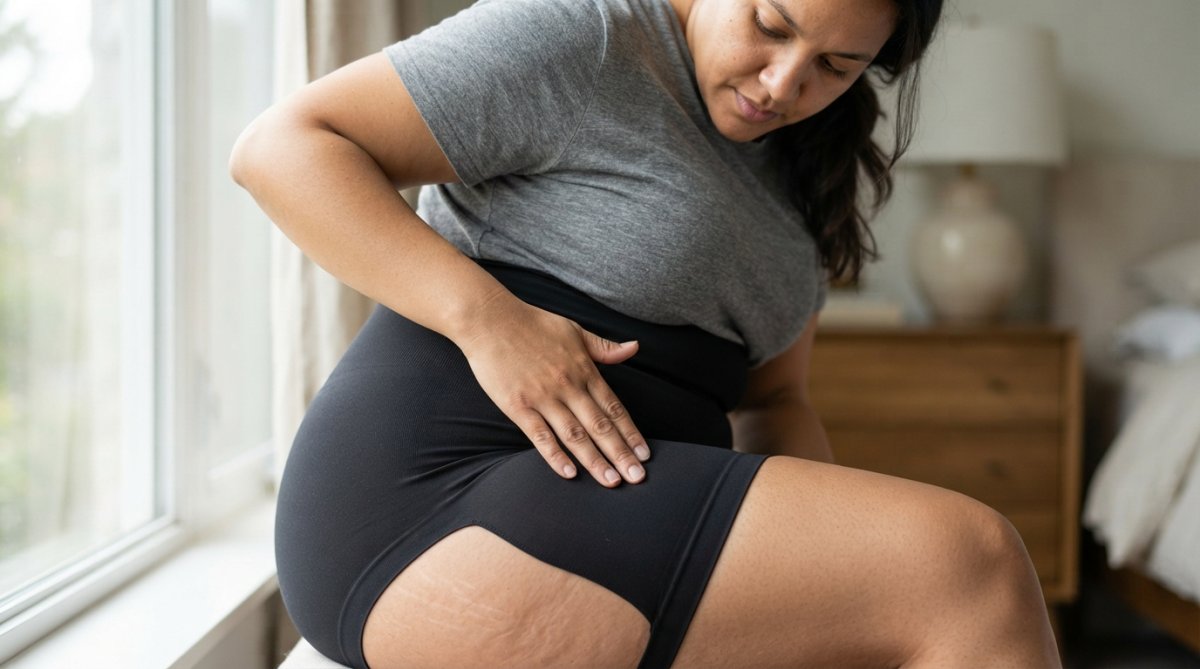
Fabric weight matters more than most guides admit. A garment that is too thin offers little barrier and wears through quickly, while one that is overly thick can trap heat and cause sweat buildup. The sweet spot is a medium-weight compression fabric that stays put without feeling like a tourniquet, offering thermal regulation so you do not overheat in high-humidity summer conditions.
Shapewear vs. Anti-Chafing Shorts: What's the Difference?
This is where most guides get fuzzy, but the distinction changes everything about how you shop. Anti-chafing shorts, often called slip shorts or chub rub shorts, are lightweight undergarments designed purely as a friction barrier. They offer minimal compression and focus on breathability and movement. Shapewear, on the other hand, adds structured compression to smooth and shape the silhouette while also covering the thigh area.
For many women, the question is whether you need both. The honest answer is that a well-designed pair of shaping shorts can do double duty, providing the friction reduction of slip shorts while also smoothing your hips and thighs under a fitted dress. The trade-off comes down to support level. If you want light barrier coverage with zero shaping, dedicated anti-chafe shorts are the simpler choice. If you want a smoother line through your midsection and hips while also preventing chafing, a shaping short is the more efficient option.
| Feature | Anti-Chafing Shorts | Shaping Shorts |
|---|---|---|
| Primary purpose | Friction barrier only | Smoothing plus barrier |
| Compression | Light, minimal | Medium to firm |
| Waistband | Often no structure | Anchored, no-roll band |
| Best for | Casual wear, breathability | Fitted outfits, all-day hold |
The best anti-chafing shorts for women who also want silhouette smoothing are shaping shorts with a secure waistband and mid-thigh coverage. The High-Waist Thigh Shaper from TLovePlusSize is our top pick here because it sits at the natural waist with a silicone no-roll band, runs to mid-thigh, and leaves the bust open so you keep wearing your own bra. At $55, it is the middle of the line in coverage and the most flexible in pairing.

How to Stop Shapewear Rolling Down and Rubbing
How to stop shapewear rolling down is the most common question we hear, and the answer starts before you even pull the garment on. The roll-down happens when the waistband lacks grip or when the garment is too short for your torso, creating downward pressure that the band cannot resist. A silicone no-roll band at the waist is the single most effective feature for keeping everything anchored.
Beyond the band, fit is everything. If the garment is too small, it will dig into your sides and roll; if it is too large, it will sag and bunch. Measure your waist and hips and match them to the size chart rather than guessing based on your usual dress size. The crotch should sit comfortably without pulling, and the leg hems should stay in place when you do a few test squats before you leave the house.
- Choose garments with a silicone or gripper waistband, not just elastic.
- Ensure the torso length matches your proportions, not just your waist size.
- Look for seam placement that avoids the most sensitive skin areas.
- Test the fit with movement before committing to a full day of wear.
Thigh Chafing Remedies: A Post-Wear Skin Care Routine
Even with the right garment, your skin needs care after a long day, especially in summer heat. Thigh chafing remedies are not just about treating the damage; they are about restoring the skin barrier so the next day starts fresh. The routine takes under five minutes and prevents the cumulative irritation that makes chafing worse over time.
Start by gently cleansing the inner thighs with a mild, fragrance-free wash to remove sweat and salt residue. Pat the area dry, never rub, then apply a barrier cream or balm containing zinc oxide or ceramides. These ingredients calm existing redness and create a protective layer that supports skin recovery overnight (PubMed). If you have active raw spots, skip tight clothing and let the area breathe.
- Cleanse gently with a fragrance-free wash to remove sweat and residue.
- Pat dry, then apply a barrier balm with zinc oxide or ceramides.
- Wear loose, breathable cotton sleepwear to let the skin recover.
- Apply a hypoallergenic moisturizer in the morning before dressing.
For prevention, some women also use an anti-chafe balm or lubricant directly on the skin before dressing, though this is less necessary when your shapewear provides a proper barrier. If you do use one, apply it sparingly and let it absorb fully before pulling on your garment to avoid residue on the fabric.
Choosing the Right Length and Coverage for Your Outfit
The right leg length on your shapewear depends entirely on what you are wearing and how much coverage you need. Mid-thigh length is the most versatile, providing enough barrier to prevent chafing while staying hidden under most dresses and skirts. For shorter hemlines or high-slit skirts, you may need a shorter inseam, while for activewear or longer days, full coverage to the knee can feel more secure.
Thigh circumference also plays a role in choosing the right garment. Women with larger thighs need a leg opening that is wide enough to avoid cutting in but snug enough to stay put. The fabric should stretch with you, not against you, and the hem should lie flat without creating a visible line under your clothing.
| Outfit Type | Recommended Coverage | Key Feature |
|---|---|---|
| Pencil skirt or fitted dress | Mid-thigh | No-roll waistband |
| A-line dress or sundress | Mid-thigh to knee | Seamless leg hem |
| Shorts or activewear | Full coverage | High waist, firm grip |
| Office attire | Mid-thigh | Breathable fabric |
For everyday wear under work clothes, the Everyday Bodysuit Shaper at $30 offers medium hold that smooths across the torso and hips without the breath-holding feeling of firm compression. If you need full hold from shoulder to mid-thigh in a single garment, the Mid-Thigh Bodysuit Shaper at $48 runs in a brown that works with deeper skin tones and disappears under what you wear. The Power Bodysuit Shaper at $30 gives you three color options to match your outfit instead of fighting it.

Final Thoughts on Preventing Thigh Chafing With Shapewear
The key to preventing thigh chafing with shapewear is choosing a garment engineered for movement, not just compression. Look for moisture-wicking synthetic fibers, seamless construction, and a secure waistband with silicone grip. Match the coverage length to your outfit and the compression level to your comfort needs, and you will stop adjusting by midday.
Skin care matters just as much as the garment. A simple post-wear routine that cleanses and restores the skin barrier will keep chafing from becoming a recurring problem, even in the hottest months. When both the fabric and your skin are properly cared for, thigh chafing stops being something you dread and becomes a problem you have already solved.
Frequently Asked Questions
Does all shapewear prevent thigh chafing?
No. Shapewear only prevents chafing if it creates a physical barrier between your thighs. Briefs and high-cut styles leave your upper legs exposed, so skin-to-skin contact still happens. Look for pieces with legs that extend to mid-thigh, like a high-waist thigh shaper. The leg coverage acts as a buffer, while the compression keeps the fabric from shifting. Seamless construction also matters because rough seams can create new friction points.
How do I choose the right length of shapewear for anti-chafing?
Choose length based on your outfit and chafing zone. For dresses and skirts, mid-thigh coverage is the most reliable because it covers the area where your legs rub together. For pants, a shorter leg might be enough. Consider the fabric weight too: lighter fabrics need longer coverage to stay in place. If you are between sizes, size up so the leg bands do not dig in, which causes its own irritation.
What is the difference between shapewear and anti-chafing shorts?
Anti-chafing shorts are lightweight slip shorts designed only to prevent friction. Shapewear adds targeted compression to smooth and shape your tummy, hips, and thighs while also preventing chafing. If your main goal is a smooth silhouette under fitted clothing, shapewear does double duty. If you only need friction protection under a loose dress, basic shorts might be enough. For all-day wear, choose medium-hold shapewear that smooths without feeling restrictive.
Choosing the right shapewear is about finding pieces that move with your body and hold up through real days, not just photo shoots. TLovePlusSize designs shapewear that smooths and shapes while preventing chafing, with options from everyday bodysuits to high-waist thigh shapers that stay put. Explore the collection and find the piece that lets you forget about friction and focus on your day.
Get started with TLovePlusSize and find shapewear that stays where it belongs.