


Table of Contents
- What Makes Premium Shapewear Different: Fabric, Construction, and Fit
- The Real Benefits of Premium Shapewear: Smoothing, Support, and Confidence
- How to Choose the Right Shapewear Size for Your Body
- How to Stop Shapewear Rolling Down: Fit and Fabric Tips
- How to Care for Premium Shapewear to Extend Its Life
- Cost Per Wear: The Long-Term Value of Premium Shapewear
- Frequently Asked Questions
Last Updated: September 23, 2026
What Makes Premium Shapewear Different: Fabric, Construction, and Fit
Premium shapewear is worth it because the difference lives in the fabric and the engineering, not the label. Cheaper garments rely on stiff elastic that squeezes one area and gives out everywhere else. Better construction distributes pressure across the torso, hips, and thighs so the garment holds a smooth line without digging in.
The real gap comes down to three things:
- Fabric recovery: quality knits snap back to their original shape after washing, while budget blends stretch out permanently within weeks
- Seamless construction: bonded edges and laser-cut hems sit flat under clothing instead of creating ridges
- Ergonomic design: panel placement follows the body's natural contours, which is why a good piece stays put through a full workday
What most guides miss is that a $30 bodysuit built with four-way compression knit outperforms a $15 one that loses its elasticity after five wears.
The Real Benefits of Premium Shapewear: Smoothing, Support, and Confidence
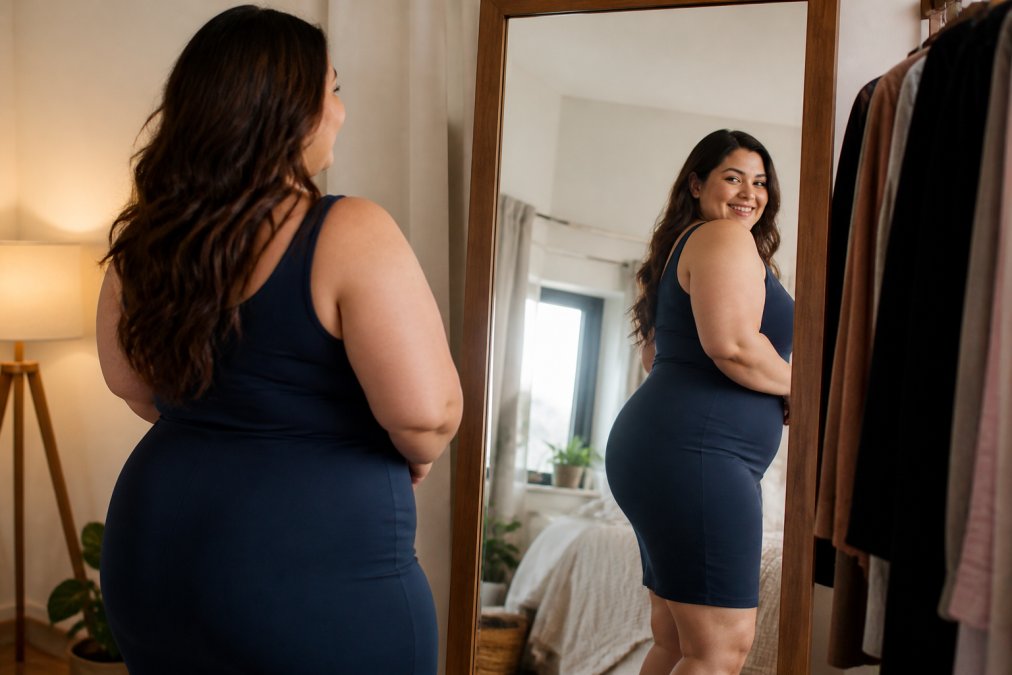
The benefits of premium shapewear go beyond a smoother silhouette. A well-made piece provides consistent compression that supports posture, reduces the friction that causes thigh chafing, and creates a clean base layer under clingy fabrics. That reliability is what makes it a genuine wardrobe staple rather than a special-occasion purchase.
What the compression is actually doing
Most guides stop at "it smooths you out." The more useful explanation is mechanical. Shapewear works by applying graduated pressure, firmest at the waist and lower abdomen, easing toward the ribs and hips, so soft tissue is redistributed rather than crushed. Premium knits hold that gradient because the elastane is blended evenly through the yarn. Budget blends concentrate stretch in a few stiff panels, which is why they squeeze one zone and gap everywhere else.
Compression levels, matched to the occasion
Compression is not one setting. Think of it as three tiers:
- Light hold, smoothing only, roughly the pressure of a fitted athletic legging. Best for daily wear, travel, and anything you'll have on for 10+ hours.
- Medium hold, visible shaping at the waist and tummy without a locked-in feel. The workhorse tier for dresses, workwear, and events.
- Firm hold, maximum sculpting for bodycon, formalwear, and photos. Genuinely uncomfortable past a few hours, and not meant to be a daily driver.
The angle most guides skip: the ergonomic and physiological case
Almost every shapewear article argues from aesthetics. The stronger argument is ergonomic, and it's the one competitors leave on the table.
- Circulation. Pressure that's spread over a broad area and released when you take the garment off is very different from a narrow, tight band digging into the ribs or groin for hours. The band is where problems start, not the compression itself.
- Posture and core awareness. Gentle, even compression gives light proprioceptive feedback, your body senses the support and tends to hold itself straighter. It's not a substitute for strength work, and no garment will "fix" posture on its own, but the cue is real.
- Fit is non-negotiable. A garment that's too small creates the exact problems, rolling, digging, restricted breathing, that people blame on shapewear as a category.
- Duration matters. Most practitioners suggest treating firm compression as event wear, not an all-day, every-day habit, and giving your body hours out of it.
- It is not a medical device. If you're postpartum, post-surgical, or managing a circulation or pelvic-floor condition, that's a conversation with your clinician, not a size chart. Medical-grade compression garments are fitted and specified differently from fashion shapewear, and the two should not be swapped.
How to Choose the Right Shapewear Size for Your Body
Choosing the right shapewear size starts with your current measurements, not the size you wear in regular clothing. Shapewear runs on its own scale, and sizing up rather than down is almost always the correct call. A garment that fits properly smooths; one that's too small rolls, digs, and creates the exact bulges it's supposed to hide.

How to Stop Shapewear Rolling Down: Fit and Fabric Tips
Shapewear rolls down for one of two reasons: the size is wrong, or the construction is cheap. Fixing the roll starts with fit consistency. A garment that matches your proportions and uses anti-roll technology at the waistband and leg openings will stay in place through a full day at work.
How to Care for Premium Shapewear to Extend Its Life
Caring for premium shapewear correctly is what protects the elasticity you paid for. Hand wash in cool water with a mild detergent, then lay flat to dry. Heat is the enemy: hot water and a dryer break down the elastane fibers that give the garment its shape retention, and once that recovery is gone, the piece is finished.
Cost Per Wear: The Long-Term Value of Premium Shapewear
Cost per wear is where the value proposition becomes obvious, but only if you actually run the numbers instead of asserting them. Here's the arithmetic.
The math, worked out
Cost per wear = purchase price ÷ number of wears before the garment stops doing its job.
| Factor | Budget Shapewear | Premium Shapewear |
|---|---|---|
| Typical price | $10-$18 | $30-$55 |
| Wears before compression fades | Roughly 5-15 | Roughly 80-150 with proper care |
| Cost per wear (2x/week) | Rises fast as it fails | Stays low over the garment's life |
| Replacement cycle | Every few weeks to a couple of months | Every 12-24 months |
| Effective annual spend | Often higher | Often lower |
Why premium fabric actually lasts: the recovery mechanism
This is the part the "it's just better quality" guides never explain. Shapewear stretch comes from elastane (spandex) blended into a knit. Every time you put the garment on, you stretch those fibers; every time you take it off, they're supposed to snap back to their original length. That snap-back is called recovery.
Two things destroy recovery:
- Heat. Hot water and a dryer relax the elastane and permanently reduce its ability to return to shape. This is the single fastest way to kill a good garment.
- Sustained overstretch. A garment that's too small is stretched past its elastic limit every time you wear it. The fibers don't fully return, and the piece gets progressively looser and less supportive, the opposite of what the buyer wanted.
The honest trade-offs
Premium isn't automatically the right call for everyone, and pretending otherwise is how you lose a reader's trust:
- If you wear shapewear twice a year for a specific dress, a mid-priced piece is the rational buy. You won't put enough wears on it to amortize a premium price.
- If it's a daily staple, premium wins on math and on comfort, the two compound.
- If you're still dialing in your size, buy one mid-priced piece first. Fit matters more than price tier, and a premium garment in the wrong size is still a bad garment.
- Care is part of the cost. A premium piece you machine-wash on hot will underperform a budget piece you hand-wash. The durability argument only holds if you protect the elastane.
Where the price actually goes
A $30-$55 price tag isn't markup for a label. It reflects denser knit construction, bonded or laser-cut edges that lie flat instead of creating ridges, panel placement engineered to follow the body's contours, and quality control that keeps sizing consistent across the line. TLovePlusSize builds its line around this idea: medium-hold everyday pieces like The Everyday Bodysuit Shaper and the Power Bodysuit Shaper are priced at $30 so the durability argument actually holds at checkout.


Frequently Asked Questions
What is the best shapewear that actually works?
The best shapewear depends on your needs, but quality matters most. Look for pieces with four-way stretch, seamless construction, and features like adjustable straps or open-gusset designs. For everyday smoothing, medium-hold options like The Everyday Bodysuit Shaper provide all-day comfort without digging in. For sculpted looks, firm options like The Firm Sculpt Bodysuit offer stronger compression. Always check reviews from women with similar body types to ensure a proper fit.
How can you tell if shapewear is high quality?
High-quality shapewear uses dense, recovery-rich fabrics that snap back after wearing, not thin materials that stretch out. Check for flat seams, reinforced edges, and features like anti-roll technology or adjustable closures. Premium pieces often have a higher weight and feel substantial. Reading customer reviews about durability and fit consistency can also indicate quality. If a garment loses its shape after a few washes, it's not built to last.
What are the long-term benefits of wearing high-quality shapewear?
High-quality shapewear offers better pressure distribution, reducing discomfort and potential skin irritation. Over time, well-made pieces maintain their shape retention and elasticity, so they keep performing after many wears. They also provide consistent support for posture and core stability, which can help with daily comfort. Investing in premium construction means fewer replacements, saving money and reducing waste.
Does shapewear actually make a difference?
Yes, shapewear can smooth your silhouette and boost confidence under clothing. Premium shapewear uses compression and strategic paneling to contour the body, creating a streamlined look. It can also prevent thigh chafing and provide support for postpartum recovery. The difference is most noticeable under fitted or clingy fabrics, where a smooth base layer eliminates visible lines and bulges.
The challenge with shapewear is that most pieces fail exactly when you need them most, rolling down at work or losing hold after a few washes. TLovePlusSize designs pieces that move with your body, from medium-hold everyday essentials to firm sculpt styles with open-gusset convenience and adjustable closures. Explore the collection and find a fit that stays put from morning to night. Explore Now.